

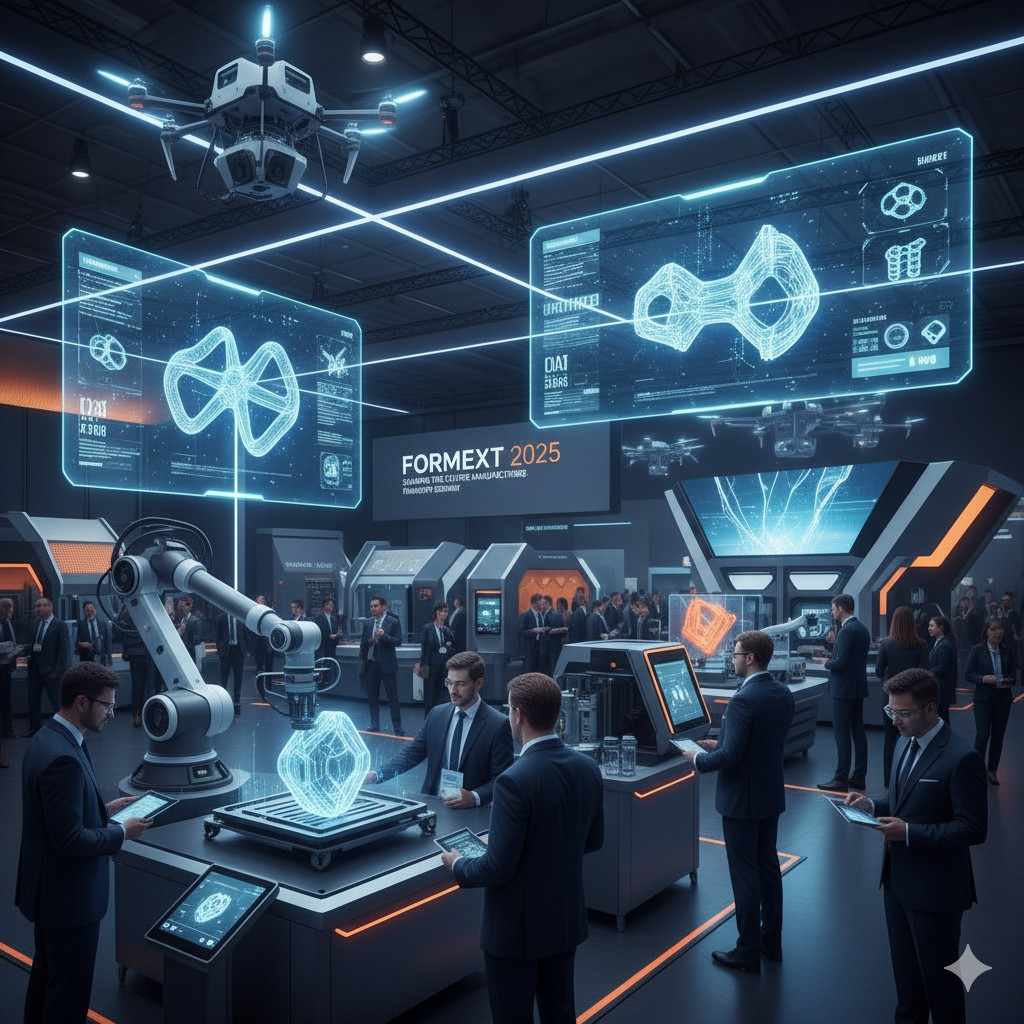
Major OEMs are unveiling production-ready systems, including large-format metal WAAM solutions, hybrid AM+CNC machines, and automated depowdering cells aimed at true factory integration. Notable showcases include ceramic casting core production on Lithoz platforms for next?gen turbine blades and Incus’s Hammer Pro25 targeting surface finish with reduced post-processing needs. Software is stepping up with AI-integrated manufacturing suites that push autonomous, adaptive production across platforms.
Notable R&D breakthroughs
Academic teams reported dissolvable, reusable supports to reduce waste and improve design freedom in complex prints, addressing a persistent cost and sustainability bottleneck. Dual?light resin chemistries are enabling multi?function parts from a single print, pointing to next?gen medical and soft robotic applications with tunable properties in?build.?
What this means for businesses
Move toward hybrid cells: Pair AM with CNC and automated depowdering/finishing to hit repeatability and cost targets for production.?
Invest in software: Prioritize AI?assisted planning, monitoring, and MES integration to reduce failure rates and cycle time.?
Align with standards: Track F42 developments to fast?track qualification and reduce testing overhead in regulated sectors.?
If this is for a Bharat?focused manufacturing blog, consider angles on localized production, spare?parts digitization, and automotive tooling where AM’s time and cost benefits are immediate for MSMEs and suppliers.